What Is Call Tracking? A Plain-English Guide for Marketers
You can measure almost everything a visitor does on your website. Clicks, form fills, page views, time on page. Then someone picks up the phone, and the data trail goes cold.
For a lot of businesses, the phone is where the real money is. People call to book appointments, ask about pricing, or close a deal they were not ready to finish online. If you cannot tell which marketing brought those callers in, you are guessing about half of your results.
Call tracking is how you stop guessing. This guide explains what it is, how it works in simple terms, and what you can do with the data once you have it.
What Is Call Tracking?
Call tracking is a method of connecting each inbound phone call to the marketing source that produced it. Instead of seeing a call as an anonymous ring, you see the campaign, the ad, the keyword, or the web page that sent the caller to your number.
It works by assigning trackable phone numbers to your marketing channels. When a call comes in on one of those numbers, the system records where it came from and ties it to the rest of your analytics. The caller dials a normal number and reaches you as usual. The tracking happens quietly in the background.
The result is simple to describe and powerful to use: you finally know which marketing dollars turn into actual phone conversations.
Why Phone Calls Are Worth Tracking
It is tempting to treat calls as an old-fashioned channel that does not need measuring. The numbers say otherwise.
Phone leads tend to convert at higher rates than web forms because a caller has already decided to talk to a human. They are further down the buying path. They are also harder to recover if you lose them, since a missed call rarely comes back the way an abandoned cart might.
If you spend money on Google Ads, local SEO, or any campaign that drives phone calls, those calls belong in your reporting. Otherwise you are optimizing toward the conversions you can see and ignoring the ones you cannot. For a closer look at why those conversations matter, our guide on phone call attribution breaks it down further.
How Call Tracking Works, Step by Step
You do not need to understand telecom engineering to use call tracking. The basic flow looks like this.
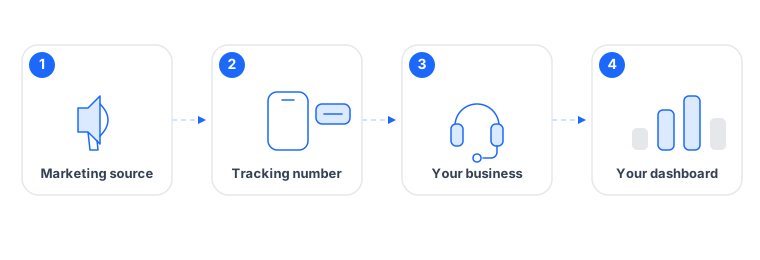
1. You get tracking numbers. The platform provisions phone numbers for you, either local or toll-free. You can learn more about the difference in our guide to call tracking numbers.
2. You assign numbers to sources. One number might represent your Google Ads campaign, another your printed flyer, another your organic listing. For website traffic, a technique called dynamic number insertion swaps the displayed number based on how each visitor arrived, so you can track sources without buying a separate number for every visitor.
3. A call comes in. The caller dials the tracking number. The platform logs the source, then routes the call straight through to your real business line. The caller notices nothing unusual.
4. You see the data. Each call shows up in your dashboard with the source attached, often alongside a recording, the call length, and whether it was answered. From there you can push the data into Google Analytics or your ad platforms.
If you want a deeper technical walkthrough, our companion article on how call tracking works covers routing, recording, and attribution in more detail.
What You Can Do With Call Data
Collecting the data is only the start. The value comes from acting on it.
Spend smarter. When you can see that one campaign drives ten calls a week and another drives none, the budget decision makes itself. You stop paying for ads that look busy but produce no conversations.
Improve your messaging. Call recordings reveal the questions people actually ask. That is free market research for your landing pages, your scripts, and your sales team.
Route calls better. Good platforms let you send calls to the right person based on time of day or campaign. Pairing this with a call whisper message tells whoever answers where the caller came from before they say hello.
Report honestly. Agencies and in-house marketers alike can finally show the full picture, including the leads that came in by phone. Our overview of marketing call tracking shows how teams fold this into their regular reporting.
Who Uses Call Tracking?
Any business that earns phone leads can benefit, but a few groups lean on it heavily.
Marketing agencies use it to prove their work drives real calls for clients. Local service businesses such as law firms, dentists, and home services rely on it because the phone is their primary lead channel. Paid search advertisers use it to tie calls back to specific keywords, which is the whole point of PPC call tracking.
If your customers prefer to call, you are a candidate.
Getting Started
You do not need a complicated setup to begin. Pick one channel where you suspect calls are happening, assign it a tracking number, and watch the data for a few weeks. Most businesses are surprised by how many calls a single campaign produces once they start counting.
When you are ready to see the full feature set, including recordings, attribution, and routing, take a look at what Analytic Call Tracking offers, or start a free trial and track your first calls this week.
Call tracking is not about adding more dashboards to your life. It is about closing the one blind spot that has been hiding half of your results.
Call Tracking Software for…
SEO & PPC
End the uncertainty of marketing campaigns with Analytic Call Tracking.
Try FREE for 15 daysNo credit card required. Cancel anytime.